Home › Commercial Stamped and Decorative Concrete
Upgrade your property with commercial stamped concrete in Longview, TX. We install decorative plazas, walkways, and entry pads that mimic stone or brick while delivering concrete strength. Custom colors and patterns help reinforce your brand and project image.
Longview Concrete Pros provides professional commercial stamped concrete throughout Longview, TX, Texas and the surrounding area. Our licensed, insured crew delivers safe, clean, on-time work with a free estimate before anything begins. Call
(430) 703-2740 or request your free quote.
Commercial Stamped Concrete for Longview Businesses
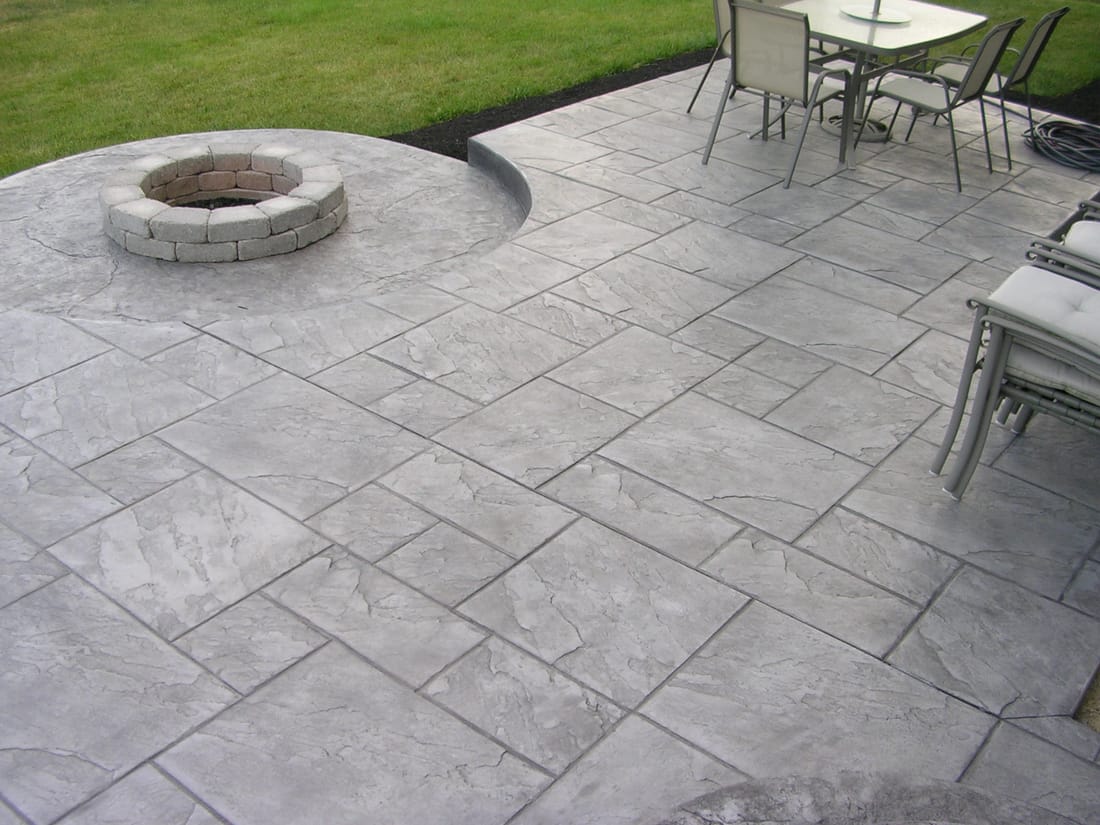
Commercial stamped and decorative concrete is a practical way to get the look of brick, stone, pavers, or wood without giving up the durability you need in a business setting. At Longview Concrete Pros, we install these systems for storefronts, restaurants, medical offices, warehouses, schools, and churches across Longview, TX and the surrounding East Texas area.
Where plain gray concrete can look unfinished, stamped and decorative finishes turn a high-traffic surface into part of your brand and customer experience. For example, we often use brick patterns with contrasting borders at retail entrances, wood plank textures for restaurant patios, and seamless stone patterns in courtyards or office plazas. The key is balancing looks with slip resistance, thickness, and reinforcement so the slab actually holds up under real commercial use.
Local conditions in Longview matter. Our hot summers, clay soils, and occasional heavy rains affect how concrete sets and moves over time. A pattern that works in a cooler, drier region might become slick when wet here or show cracks faster if the base is not compacted for our local soil. Because we pour and finish concrete in this climate every week, we know which stamp textures give grip when it rains, which color hardeners hold up under UV exposure, and how to design control joints so patterns still line up while allowing the slab to move slightly without random cracking.
How Commercial Stamped Concrete Is Installed (Start to Finish)
A quality commercial stamped concrete job is mostly about careful prep and timing. Here is how Longview Concrete Pros typically handles a project from start to finish.
First, we walk the site with you. We check old slabs, drainage paths, traffic patterns, and any elevation issues. At many Longview properties we see water flowing toward the building or pooling near entrances. If we do not correct the grade and drainage first, a beautiful stamped surface can become slick or stay damp. So we plan slopes, drains, and curb lines before we ever talk about stamp patterns.
Next is subgrade and base prep. We strip any soft topsoil or failed concrete, then compact the exposed subgrade. In this area, clay pockets and fill dirt are common. We often bring in and compact a layer of crushed limestone or similar base material so the slab has an even, stable foundation. For commercial use, we usually go thicker on the base than a typical residential job to handle heavier loading and frequent traffic.
Reinforcement and formwork come next. Depending on use, we may use rebar, welded wire mesh, or fiber reinforcement, or a combination. Dumpster pads, loading zones, and drive lanes will typically get more rebar than a decorative patio that only sees foot traffic. Forms are set to the right elevations to control water flow, and we mark planned control joint locations so they line up with the stamp pattern later.
Then we pour and stamp. We use a concrete mix designed for local conditions, often with a lower water-cement ratio and additives that help with workability in East Texas heat. Once the concrete is placed and screeded, we float and trowel it to a specific firmness. Color hardener or integral color is added depending on the design. When the surface reaches the right stage, we apply release (powdered or liquid) and press the stamp mats in a planned sequence. This is where the crew size matters. You need enough hands to keep a consistent texture before the concrete sets in our warm climate.
After stamping, we cut joints, clean the surface, and apply the initial cure. Later, once the slab has cured enough, we return to wash, detail, and seal the surface. Commercial projects often get a more robust sealer schedule than residential jobs because of higher wear, frequent cleaning, and exposure to things like de-icing products or vehicle fluids.
Design, Patterns, and Color Choices That Work in Longview, TX
Commercial stamped and decorative concrete has a wide range of looks, but not every option is practical for every business. At Longview Concrete Pros, we start with how the space is used, how it is cleaned, and how it ties into your building and branding.
For entrances and sidewalks, we often recommend brick, cobblestone, or small ashlar stone patterns because the joints and texture help with traction. Smooth, large stone patterns might look good in a brochure, but in a wet Longview rain they can be slick if not paired with the right texture depth and sealer. For service courtyards or areas that see carts or dollies, we may use a lighter texture or a seamless skin so small wheels do not bump through deep grout lines.
Color choices matter in the Texas sun. Very dark tones can get hot enough in August to be uncomfortable for customers in sandals, especially on open patios. We often suggest medium earth tones, charcoal accents, or two-tone finishes that break up the surface without becoming a heat sink. Using integral color in the mix with a color hardener on top can give depth and help wear areas stay closer to the original tone longer.
For branding, we can integrate bands, borders, and custom saw cuts to frame doors or lead people toward specific entries. For example, a retail center might use a wide stamped border that runs along the storefronts, with a different pattern in front of anchor tenants. A restaurant might use a wood-plank stamp on the patio, a stone pattern at the entry, and a simple broom finish for staff-only service walks. Because we are local, we can show real examples from job sites around Longview and help you see how colors and patterns have aged, not just how they looked on day one.
We also discuss long-term maintenance during the design phase. Busy car lots, gas stations, and drive-thrus will see tire turning and fuel or oil spills that can discolor lighter shades, so we might steer you toward mottled or textured color schemes that hide stains better and specify more frequent sealing in the maintenance plan.
Costs, Durability, and Common Problems (and How We Prevent Them)
The cost of commercial stamped concrete is higher than plain broom-finished concrete because of extra labor, materials, and detail work, but there are ways to control your budget without giving up durability.
Major cost drivers include slab thickness, reinforcement type, pattern complexity, coloring method, site access, and how much tear-out or base prep is needed. For example, a simple seamless stone texture with integral color on a new, easily accessed site will cost less per square foot than a multi-color, multi-pattern stamped overlay installed in an inner courtyard that requires concrete to be pumped in. At Longview Concrete Pros we often help clients phase projects, such as pouring the heavy traffic drive lanes in plain concrete with decorative bands and only stamping the customer-facing areas.
Common problems with stamped concrete in commercial settings include random cracking, spalling at joints, sealer peeling, and slick surfaces when wet. Most of these issues come from poor prep or shortcuts, not the product itself. To prevent random cracks, we design and cut control joints at correct spacing for our local temperature swings and slab thickness. We also place joints so they fall along grout lines whenever possible, which keeps the pattern looking clean.
Spalling and chipping often show up where vehicles turn or at poorly installed joints. Using the right concrete mix, protecting fresh slabs from early traffic, and using appropriate joint materials reduces this risk. In high-load areas, we may thicken the slab or add dowels between pours so edges do not break down.
Sealer failure is especially common when contractors use the wrong product or apply it too thick. In Longview's humidity, trap too much moisture under a heavy coat of sealer and it can turn cloudy or peel. We evaluate moisture levels before sealing, use commercial-grade breathable sealers, and apply them in thin, even coats. For surfaces that need extra traction, we can add a fine grit to the sealer, which is important for restaurants, medical offices, and any property where customers may walk in with wet shoes.
Slickness is a major concern wherever water is present. We match pattern depth, texture, and sealer sheen to the use of the area. For example, a highly stamped courtyard that looks fantastic may get a lower-gloss sealer with a grit additive so it stays safe for employees and visitors even during one of our sudden East Texas downpours.
What to Expect When You Hire Longview Concrete Pros
Commercial stamped and decorative concrete projects always work better when the owner, contractor, and any other trades stay coordinated. Longview Concrete Pros follows a step-by-step process so you know what is happening and how it affects your operations.
We begin with a site visit and planning meeting. You tell us how the area is used, when you are busiest, and what access limits we need to work around. Many Longview businesses cannot shut down completely, so we often phase work or pour in sections, doing some areas at night or early morning. We also discuss traffic control, temporary walkways, and signage so customers and staff can move safely around wet concrete areas.
Next we finalize design, pattern, color, thickness, and reinforcement. We provide a written proposal that calls out these details rather than using vague terms. For stamped work this matters, because changing from one pattern or color system to another mid-job can cause delays and extra cost.
Scheduling comes next. Weather is a real factor in East Texas. If heavy rain or extreme heat is in the forecast, we may shift the pour date to protect the concrete and your investment. We keep you updated so you can coordinate any landscaping, striping, or other trades that need to follow our work.
During the job, a supervisor is on site to manage crew timing, stamping sequence, finishing, and cleanup. We protect nearby walls, doors, and existing concrete from color and release materials and we maintain clean edges and transitions to existing slabs or asphalt. If your project involves tying into city sidewalks or drive approaches, we also ensure the work meets local codes and ADA requirements.
After the concrete is poured, stamped, and sealed, we walk the site with you, explain curing times, when foot and vehicle traffic can resume, and what early maintenance looks like. You will know how often to reseal, what cleaning products to use, and what to avoid so you get the full life out of your commercial stamped concrete. Because we are based here in Longview, TX, you are not dealing with an out-of-town crew. If any issue shows up, we can come back, inspect it, and address it quickly.