Home › Concrete Retaining Walls
Control slopes and protect your yard with a concrete retaining wall in Longview, TX. We build poured and block retaining walls to manage grade changes and erosion. Our designs focus on drainage, stability, and a clean look that complements your landscape.
Longview Concrete Pros provides professional concrete retaining wall throughout Longview, TX, Texas and the surrounding area. Our licensed, insured crew delivers safe, clean, on-time work with a free estimate before anything begins. Call
(430) 703-2740 or request your free quote.
Custom Concrete Retaining Walls Built for Longview Properties
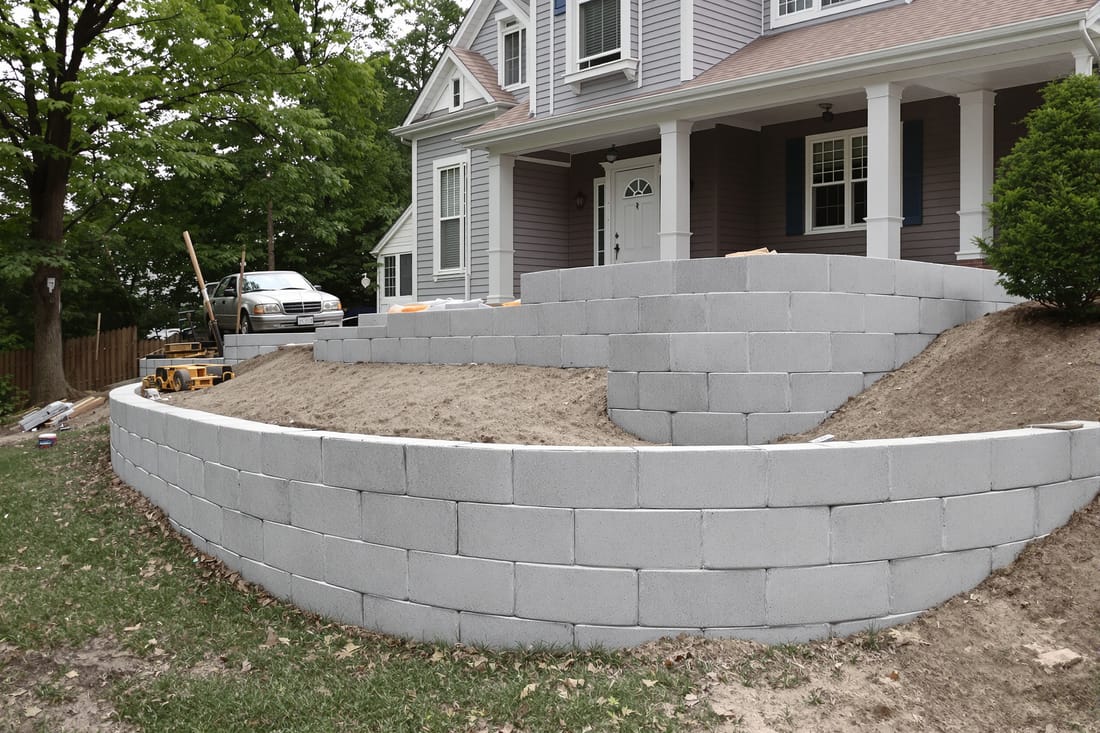
Concrete retaining walls are more than just something to hold dirt in place. In Longview, with our mix of clay soils, tree roots, and heavy rains, a well built concrete retaining wall can protect your foundation, keep your yard usable, and make sloped areas look finished instead of messy. At Longview Concrete Pros, we focus on retaining walls that actually solve drainage and erosion problems, not just look good for a year and then crack.
When we visit your property, the first thing we look at is what the wall really needs to do. Are we holding back a couple of feet of garden soil, or supporting a steep driveway cut? We check soil type, slope, nearby structures, and existing drainage. This tells us what wall thickness, footing size, and reinforcement will be needed so the wall does not bow or lean over time. For many Longview backyards a 3 to 4 foot wall with proper footing and weep holes is enough, but on steeper lots or around driveways and pools we often recommend taller, thicker, and more heavily reinforced designs.
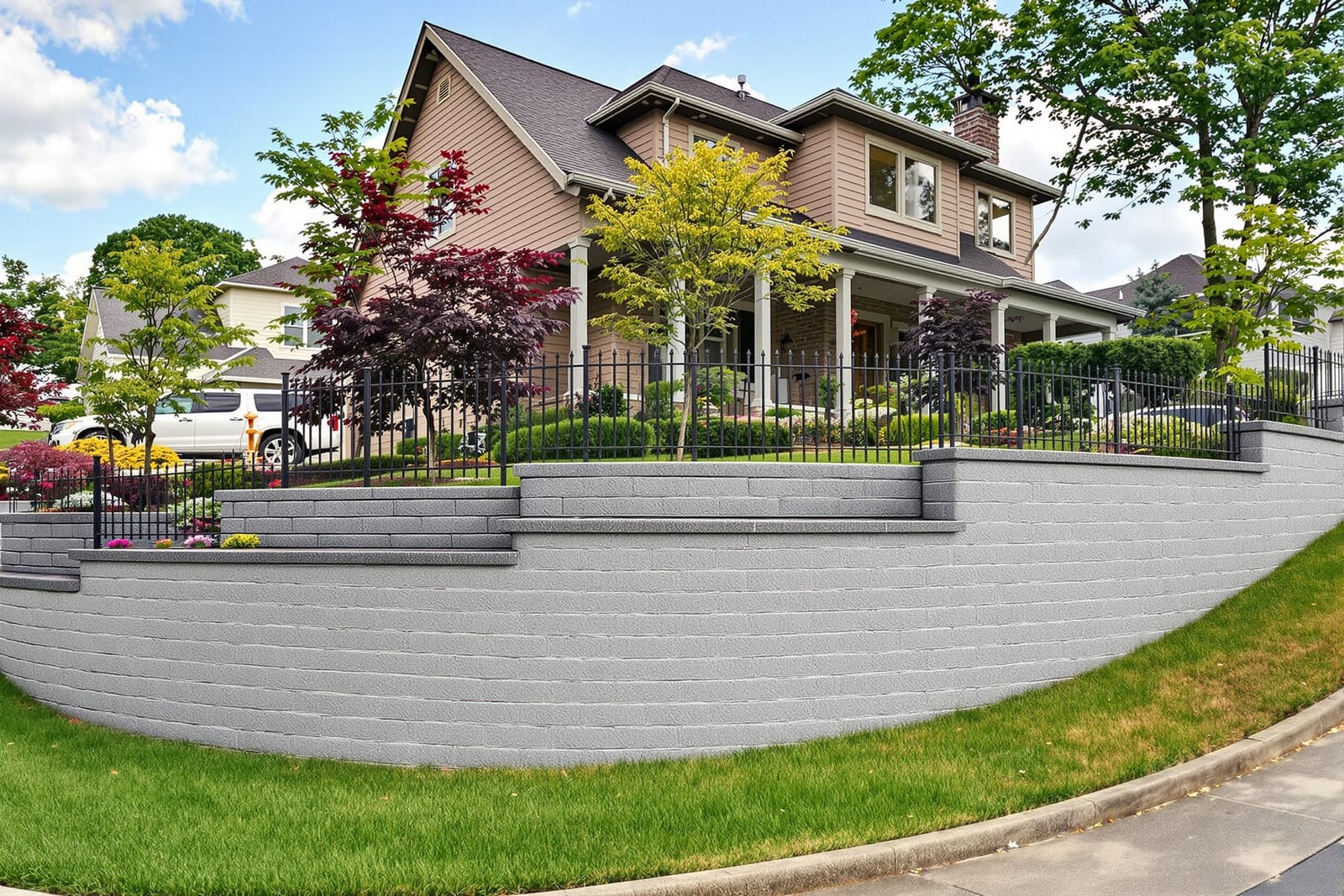
We also talk through finishes and style with you. Some homeowners want a simple smooth gray wall with a clean modern look. Others prefer a stamped or textured face that mimics stone, so it matches brick homes or natural landscaping common in East Texas. We can add caps, steps, and integrated planters to make the wall feel like part of your outdoor space instead of just a barrier. The goal is always the same: a concrete retaining wall that handles Longview’s weather and soil while still fitting the look of your property.
How We Design and Engineer a Reliable Concrete Retaining Wall
A retaining wall works by holding back lateral soil pressure, so the design matters more than the surface look. Longview Concrete Pros starts with measuring the height of the slope, depth of the soil behind it, and any surcharge loads such as parked vehicles, sheds, or fences on top. For taller or more heavily loaded walls, or walls near foundations, we often involve an engineer to confirm footing depth, steel size, and spacing. That small upfront step prevents costly movement or failure later.
Typical cast in place concrete retaining walls in Longview use a continuous footing below the frost line, usually 18 to 30 inches deep depending on soil conditions. We set rebar vertically and horizontally, tied together in a grid pattern, so the wall behaves as a single reinforced structure instead of separate pieces. For high moisture areas or where irrigation runs constantly, we sometimes specify a thicker wall or additional steel at the base where the pressure is greatest.
Drainage is just as important as strength. Wet, trapped soil can double the pressure on a wall. We design a drainage system behind the wall that usually includes perforated drain pipe set at the base, wrapped in filter fabric and surrounded by clean gravel. The pipe routes water away to a safe outlet point in the yard, street, or drainage swale. Weep holes through the wall can also be included in higher or longer walls to let water escape. Without this, water builds up behind the wall, especially during East Texas thunderstorms, and can push the wall outward over time.
We also pay attention to expansion joints and control joints. Long stretches of concrete want to crack as they expand and contract with our hot summers and cool winters. By planning joints at regular intervals and at corners, we allow the wall to move slightly without ugly random cracks. This level of design detail is what sets a long lasting retaining wall apart from a basic poured barrier.
Our Step by Step Concrete Retaining Wall Installation Process
When you hire Longview Concrete Pros, you get a clear process so you know what is happening in your yard each day. After the initial consultation and design, we call in utility locates so we do not hit any buried lines. Once everything is cleared, our crew starts excavation, cutting back the slope to create room for the footing and for the gravel drainage zone behind the future wall.
We then trench and level the footing area, compact the subgrade, and install formwork to the correct width and depth. Rebar cages or grids are assembled and placed in the forms at the right height so they end up in the middle of the concrete, not resting on dirt. For taller walls, we add dowels that tie the footing to the vertical wall section, which keeps the wall from kicking out at the bottom.
Next comes the wall forms. We build strong wooden or metal forms that shape the front and back of the wall. This is where any design features such as steps, curves, or tiered sections get laid out. If you choose a stamped or textured finish, we plan the face formwork and schedule so the crew has time to apply patterns before the concrete sets. We double check all elevations to be sure the top of the wall lines up with existing patios, walkways, or planned landscaping.
Concrete is then placed in lifts, usually 12 to 18 inches at a time, and vibrated or rodded to remove air pockets around the rebar. This prevents honeycombing and weak spots. Once the forms are full, the crew finishes the exposed surfaces, adds any texture or edging, and covers the fresh concrete so it cures properly in our East Texas climate. In hot weather, we may mist or cover the wall to slow down evaporation so it gains full strength.
After curing, we strip the forms, install drain pipe and gravel backfill, then place soil in layers behind the wall, compacting as we go. This careful backfill step is where many walls fail when rushed or done with loose soil. Finally, we clean up the area, reconnect any irrigation, and if requested coordinate with landscapers to finish grading and planting.
Costs, Options, and What Affects Your Retaining Wall Price
Homeowners in Longview often ask why retaining wall bids can vary so much. The main drivers of cost are wall height, length, access to the site, and how much engineering and drainage work is required. A short 2 to 3 foot garden wall with easy truck access might be straightforward. A 7 foot wall supporting a driveway, squeezed between a fence and a house, will require more excavation, stronger forms, more steel, and careful coordination. That all shows up in the price.
Concrete mix and reinforcement also matter. For structural retaining walls, we typically use a 3,000 to 4,000 psi mix, sometimes with additives for improved workability or moisture resistance. Rebar size and spacing are based on height and loads, not guesswork. More steel means more cost, but it also means a wall that does not start leaning in five years. Finish choices, such as stamped textures, colored concrete, or decorative caps, add labor and materials but can make a retaining wall look like a premium feature instead of a plain barrier.
Site prep can be a big variable in Longview. Rocky areas, mature tree roots, or tight backyards where we cannot get equipment all increase labor. Sometimes we recommend terraced walls (two shorter walls with a step between) instead of one very tall wall. This can reduce overall soil pressure and sometimes saves money compared to building a single heavy duty structure.
We are transparent about these cost factors. Longview Concrete Pros will walk you through line items such as excavation, haul off, concrete volume, steel, drainage materials, and finish work so you understand exactly what you are paying for. If you have a strict budget, we can suggest ways to save, for example by keeping the wall below certain height thresholds, simplifying curves, or using a basic finish on the back side that faces a neighbor or wooded area.
Local Considerations in Longview and How to Choose a Contractor
Building a concrete retaining wall in Longview, TX is not the same as building one in a dry climate. We deal with heavy rains, clay soils that expand and contract, and a lot of tree cover. All of that affects design. For example, walls that sit at the bottom of a hill near Judson Road or in lower lying neighborhoods may need larger drainage zones and more frequent cleanouts so leaves and silt do not clog the system. Steep lots around Lake Cherokee or similar areas may call for more robust engineering so the wall holds up to water and boat traffic related vibrations.
Timing matters too. The best seasons for retaining wall work in Longview are usually late fall through early spring, when temperatures are more moderate and the ground is not as bone dry as late summer. Concrete cures better when it is not blazing hot, and it is easier to manage erosion controls when thunderstorms are less frequent. That said, we install walls year round and simply adjust curing methods, shading, and site protection based on current weather.
When choosing a contractor, ask specific questions about footing depth, rebar layout, and drainage design. If a company cannot clearly explain how water will be handled behind your wall, that is a red flag. Request addresses of previous retaining wall projects you can drive by, and ask how long those walls have been in place. At Longview Concrete Pros, we are happy to show local examples and go over past projects that match your situation, such as replacing a failing timber wall behind a house in Pine Tree or stabilizing a sloped side yard off Gilmer Road.
Also, pay attention to the cleanup and finish details in your quote. A solid retaining wall project includes haul off of old timbers or block, restoration of disturbed lawn areas, and coordination with any other trades on site. We include those details in writing so there are no surprises. In the end, a good concrete retaining wall is an investment in the stability and value of your property, and choosing a contractor who understands local conditions is the best way to protect that investment.